

By 2026, work is not about where you sit anymore. It is not about being hybrid or remote. That was yesterday. Now it is about how humans work with AI. People have digital colleagues that can handle parts of work on their own. They do not just wait for instructions. They take action.
The experimentation with GenAI in 2023 and 2024 is over. Companies are no longer testing ideas. They are making AI part of daily work. It is in planning. In decision-making. In routine tasks. AI is becoming part of the way work happens.
A survey of 31,000 knowledge workers across 31 countries and trillions of Microsoft 365 productivity signals shows that this change is already real. Leaders see that connecting people is not enough.
A digital workplace strategy in 2026 is about orchestrating intelligence. It is about humans and AI working together. Humans create. Humans solve problems. AI handles routine. Together they get work done faster and smarter.
Pillar 1. From ‘Chatbots’ to ‘Agentic Workflows’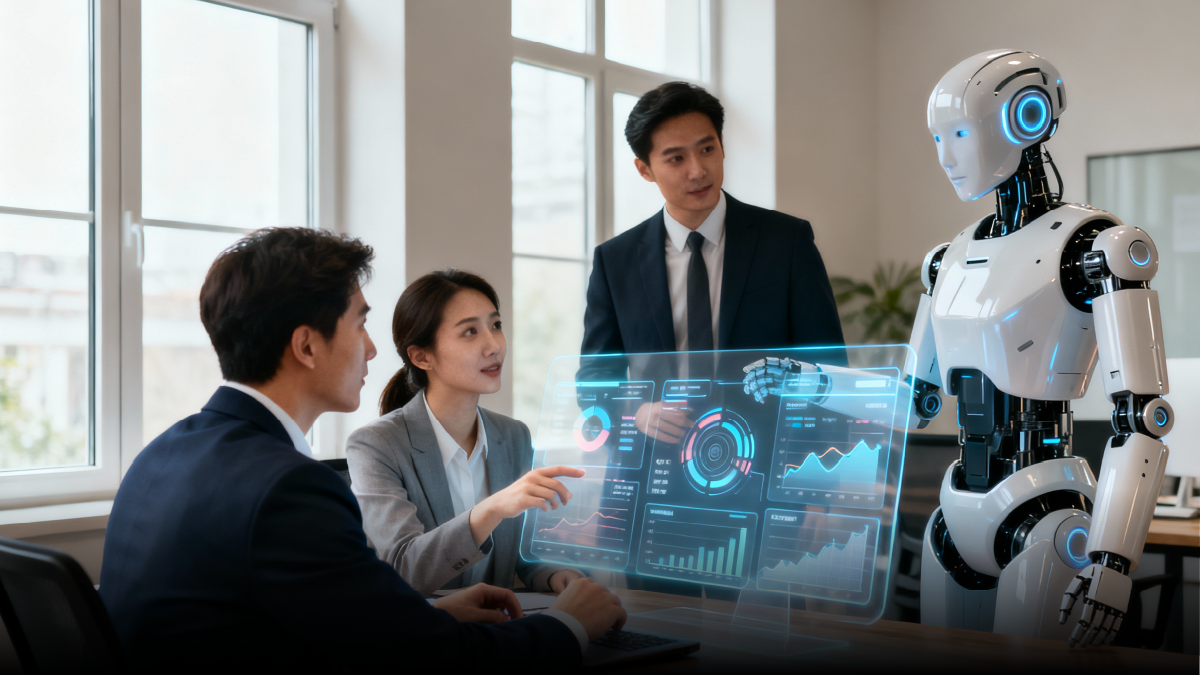
By 2026, AI at work is not something that just sits there waiting for instructions. It is no longer a side tool. It is becoming a real partner. The old chatbots that only respond when you ask them something are almost gone. Now, the idea is Agentic AI. These are digital colleagues that can take action on their own. They can follow multi-step processes without a human checking every step. Work is starting to look very different. It is not enough for companies to simply replace the old methods with AI and expect it to give the desired results. The entire process will have to be modified to allow the seamless interaction of humans and AI.
Think about inventory. Before, someone had to check stock, write an email to a supplier, maybe follow up a few times, and make sure nothing is missed. It takes time and attention. Now, an AI agent can watch inventory automatically. It notices when something is low, prepares the order, and only asks a human to approve it. The human does not have to do the repetitive parts. They can spend that time thinking, planning, or solving problems. It is quicker and more intelligent. As reported in the Microsoft 2025 Work Trend Index, a whopping 82 percent of executives in the corporate sector consider 2025 to be a crucial year to reconsider strategy and operations. That is an indication of the very high necessity for such a transformation. Companies that do not adopt AI in a real way risk falling behind.
There is also a skill called context engineering. Earlier, companies focused on prompt engineering, which is teaching AI to respond to commands. Context engineering is different. It is about giving AI the right environment, the right data, and the right context to make decisions. If it does not have this, the AI can make mistakes. Companies need to set up systems where AI can act reliably.
Experts mentioned by Virtualization Review say that human-agent teams are becoming the next normal. The companies using them see faster work, fewer errors, and better results overall. The main point of a powerful digital workplace strategy in 2026 is about human-AI collaboration. Humans perform their best, AI performs its best, and that is the way the companies will be able to compete.
Pillar 2. The Convergence of HR and IT
For years, HR and IT have been in different worlds. HR handled people. Payroll, benefits, policies, all of that. IT handled tools. Networks, apps, systems. They did their jobs, but they barely talked to each other. That worked when work was simpler. But by 2026, that cannot continue. Those silos have to go. If HR and IT do not work together, employees run into problems. Laggy apps. Logins that do not work. Tools that feel disconnected. These are no longer just IT tickets. They are reasons people leave jobs. A bad digital experience can push talent out the door
This is where Digital Employee Experience or DEX comes in. DEX becomes the most important way to measure success. It is not about checking boxes. It is about making work smoother. Every login. Every dashboard. Every app has to feel easy. Personalized. Smart. If you ignore DEX, you ignore what employees really need to do their jobs.
Hyper-personalization is part of it. Think of Netflix. It shows what you like and hides what you do not care about. The workplace works the same way in 2026. An R&D scientist sees a completely different dashboard than a Sales Director. Their tools, alerts, reports, even AI assistants are curated automatically based on their role and their habits. They see what matters to them and nothing else.
The Salesforce 2025 Global AI Readiness Index shows that countries and companies are preparing to integrate AI into everything. Policy, infrastructure, skills, adoption, all of it. This means HR and IT need to plan for AI together. If they get it right, the workplace becomes smarter. Faster. More human. Employers frictionlessly accomplish the tasks assigned to them. Firms that efficiently marry HR and IT make a digital workplace that is AI-ready, 2026-ready, and keeping people involved and efficient.
Also Read: The ITIL Framework Explained: How Modern IT Teams Deliver Consistent, Scalable Service Excellence
Pillar 3. Governance, Trust, and the ‘Shadow AI’ Challenge
By 2026, security at work is not just about firewalls and passwords. Standard cybersecurity is no longer enough. There is a new challenge, something people are calling Shadow AI. This happens when employees bring in AI tools that the company has not approved. They do it because it is faster, it makes their job easier, or they just want results now. The problem is that these tools may not follow rules. They might store sensitive data in the wrong place. They might make mistakes that could cost the company. Companies have to pay attention to this because it is happening everywhere.
The approach cannot be to block everything. That slows down work and kills creativity. Rather, the approach needs to be at guardrails, not gates. Zero-trust security is one of the measures included, but it still requires a human approach. The implication is that the workers can utilize AI assistance when it proves to be beneficial, but the organization must ensure that the confidential data and the most crucial systems are secured. Security has to be flexible enough to let innovation happen.
There is another side to this. Employees are stressed. They are worried about AI replacing them. Some even have FOBO, the fear of becoming obsolete. Technostress is real. A good digital workplace strategy does not ignore this. Transparency is a must for companies. It should be clear to the public how artificial intelligence is utilized, what its role is in decision-making, and what its exact impact on the customers is, i.e. whether it is taking their place or supporting them. As a result of the employees’ comprehension of this whole situation, they experience safety feelings. They feel empowered. They work better. They trust the system.
Governance, trust, and ethical AI use are not extra steps. They are central to a workplace that works in 2026. The companies that get this right allow humans and AI to collaborate without fear. They protect their data. They support their people. And they build a system where AI is a helper, not a threat. That is how a strong digital workplace strategy is built for the future.
Pillar 4. The Intelligent ‘Phygital’ Office
By 2026, hybrid work is no longer a policy you put in a handbook. It is just the way work happens. People move between home, office, and anywhere else without thinking about it. The office itself becomes smarter. It is not just a building anymore. It is part of the digital strategy. Every space interacts with technology to make work easier, faster, and more connected.
Meeting rooms are a good example. They are no longer just tables and chairs. They are intelligent spaces. They can transcribe everything that is said. They summarize the key points. They even assign tasks automatically to everyone who attends, whether they are in the room or joining remotely. This way, no one misses anything. No context is lost. People can focus on the discussion instead of worrying about taking notes.
Another important shift is that the default mode of work is asynchronous. There is no requirement for teams to be working simultaneously on everything. Thanks to the collaboration tools, everyone can update, comment, and make decisions according to their own time. This reduces the endless meetings and cuts down on fatigue.
AI is part of this too. The Jasper 2025 State of AI in Marketing report shows that 63 percent of marketers are already using generative AI and 79 percent plan to expand it in 2025. This is not just marketing. It shows how digital tools and AI are becoming part of daily workflows. The phygital office is a solution that joins together the digital and the physical worlds. It creates an environment where humans and AI can collaborate, prevent information blockage, and feel the workplace as connected, intelligent, and 2026-ready.
The Roadmap to 2026 Maturity
Technology is easy. People, culture, and how work actually happens are not. All the AI tools you want can be bought, the fastest systems, the most intelligent dashboards. It makes no difference if the processes are chaotic or if the employees are unsure about their tasks. That is why a clear plan is needed in any digital workplace strategy.
Start with an audit. Look for where work gets stuck. Where people switch between apps, wait for approvals, log into clunky systems. These are the points that slow everything down. Fixing them first makes a big difference.
Then, run a pilot. Pick one department. Maybe HR or Finance. Try out an Agentic AI workflow. Watch it work. See what fails. Learn quickly.
Finally, unify. Bring together HR, IT, and Operations. Talk. Align processes. Decide on priorities.
The goal is simple. Make technology invisible. Let humans think, create, and solve problems. Let AI take care of the routine. That is what a real digital workplace strategy in 2026 looks like.
