

The debate in 2026 is not about cloud versus edge any longer. The topic is how to harmonize the two technologies as one system. Businesses are transitioning into the era which is referred to as Cloud 3.0. It implies that we are not simply putting all the data in one large location anymore. Intelligence is spreading out. Decisions are happening closer to where the data is created.
The key to digital transformation today is understanding two things. Where the data lives and how fast it needs to move. Some workloads can sit in the cloud and wait a little. Others cannot. They need to react instantly, right at the source.
Cloud and edge are not opposites. They are two parts of the same puzzle. Cloud provides scale, storage, and heavy processing. Edge delivers speed and local action. All these three factors together make up the pillar of contemporary enterprise computing. The proper handling of this equilibrium is what differentiates the leaders from the rest.
Defining the Modern Enterprise Stack
In enterprise computing, cloud and edge are not just different boxes. Cloud is like the brain. It handles all the heavy thinking. Massive data lakes, long-term analytics, training big AI models. This is where patterns get noticed and decisions get support. Companies use it because it scales, it is reliable, and it can crunch complicated workloads that need a lot of power.
Edge is more like reflexes. It lives closer to the data. On IoT devices, micro-data centers, or far-off locations. It lets you act fast. Google gets this. Their Distributed Cloud runs cloud services at the edge. Even in air-gapped or regulatory-sensitive places. That means low latency, local processing, and keeping data where it has to be. Compliance is not a worry here.
Today, it is not about choosing cloud or edge. It is about using both. Let the workloads move where they need to go. Fast. Efficient. Cloud gives the big picture. Edge reacts instantly. Together, they let companies respond in real time without losing control. You get scale, speed, and security all at once. That is how the modern enterprise stack works.
Critical Comparison between Performance, Scalability, and Security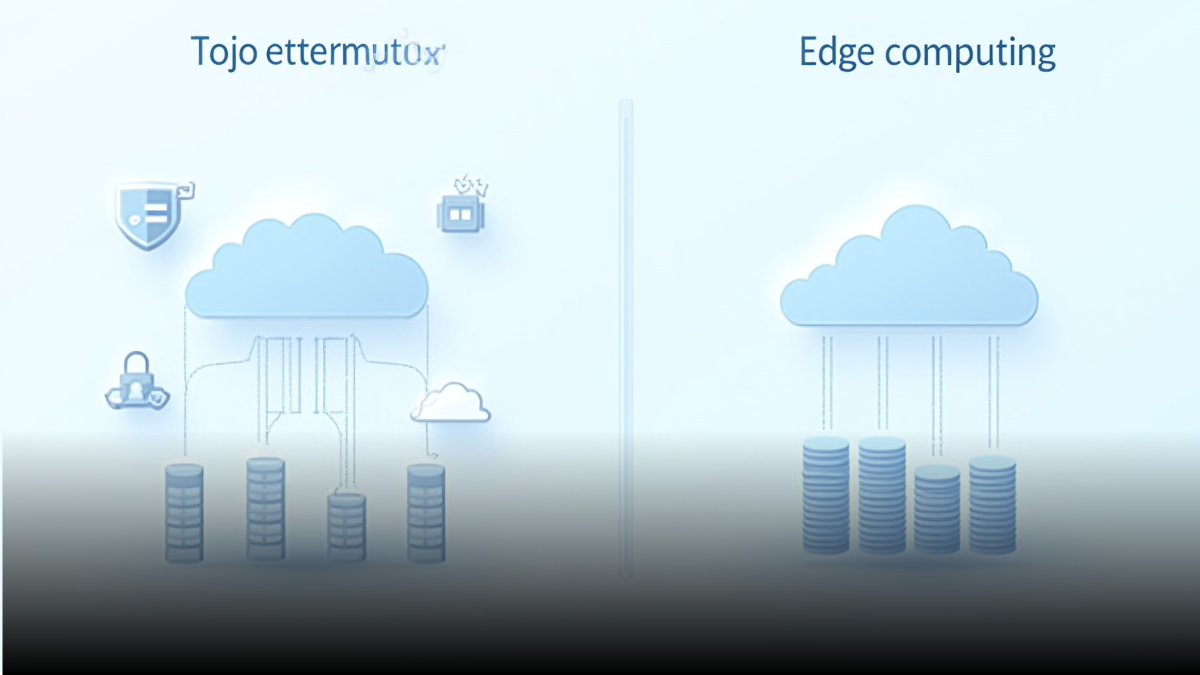
Critical Comparison Performance Scalability and Security
When you compare cloud and edge, the differences hit you in three places: speed, scale, and security.
Let’s start with speed. Cloud is powerful, but it is not instant. A round-trip to a central cloud can take 60 to 100 milliseconds. That might not sound like much, but in the world of real-time applications, it is noticeable. Edge, on the other hand, acts almost instantly. Under 10 milliseconds in many setups. That is the difference between reacting after the fact and reacting as it happens.
Scalability is another story. The cloud can grow endlessly. Add more virtual machines, more storage, more AI processing. Edge has limits. Physical servers, modular micro-data centers. You can expand, but it is not infinite. It is practical and local.
Security is often misunderstood. Cloud has top-level encryption and compliance controls. Everything is centralized and monitored. Edge reduces the surface area for data in motion. Data often stays where it is generated. This helps with GDPR and other local rules.
Google showed how both are evolving at Cloud Next 2025. They announced 229 updates across AI, infrastructure, and edge-ready services. That is proof that enterprise workloads are moving to a world where cloud and edge work together, not against each other.
Also Read: Cloud-Native Applications for the Enterprise: How Organizations Build Scalable, Resilient Digital Platforms
Understanding the Costs of Cloud and Edge
When it comes to money, cloud and edge speak very differently. Cloud is easy to start with. You do not need a huge upfront investment. You pay as you go. That is predictable and nice for budgeting. But if your applications move a lot of data, costs can grow fast. Egress fees. Bandwidth costs. Every time you send video streams or sensor data back to the cloud, it adds up. Over months and years, this becomes noticeable.
Edge is the other side. You buy the hardware first. Servers, micro-data centers, storage. That hits the budget hard at the beginning. But then things change. Less data needs to travel long distances. That cuts bandwidth costs. Response times get faster. Downtime drops. For things like sensor-heavy systems or video-heavy operations, edge can actually save money over three years. The math works out in its favor.
The key is to look at the full story. Cloud gives flexibility. You can scale instantly. But the more you move, the more you pay. Edge costs more upfront. But it keeps money in the budget later. It also speeds up operations where speed matters most.
In the real world, most companies do a mix. They put workloads in the cloud when flexibility matters. They keep high-volume, low-latency jobs at the edge. That way, costs stay under control. Performance stays high. And they do not have to compromise on either speed or control.
How to Decide Between Cloud and Edge
Deciding between cloud and edge is not always obvious. It depends on what your workloads actually need. Cloud works best when you are dealing with historical data. If you are running analytics or business intelligence, the cloud has the storage and the processing power to handle it. The same goes for big AI projects. A Google Cloud survey shows that about 90 percent of developers are using generative AI in their workflows. That means cloud is where the heavy AI lifting happens. Enterprise Resource Planning systems also do better in the cloud because they need scale and centralized control.
Edge, in contrast, is meant for applications that require a speedy response. Robots and autonomous vehicles that operate on their own must have real-time decision making. Remote monitoring in hospitals or on oil rigs cannot wait for a cloud round trip. Customer experiences that depend on AR or VR also need instant responses. Edge puts the computing close to where it matters so latency is minimal and reliability is high.
In real life, you will consider three items. Data volume, latency you can tolerate, and the reliability of your connection. Do you have high volume, low latency, or an unstable connection? Edge might be the better choice. Low volume, high computation, flexible latency? Cloud will work. Most enterprises use a mix. They have placed certain workloads in the cloud, and others at the edge, consequently, they are able to enjoy both worlds to the fullest. It is not an issue of one versus the other. It is about using the right tool for the right job.
How Hybrid and Distributed Cloud Works in 2026
Enterprises are not building apps the same way they used to. Running everything in the cloud is not enough anymore. Some apps need to act fast right where the data is. That is why people are talking about edge-native apps. These are apps built to run locally first and then connect to the cloud. They can respond immediately to events without waiting for anything.
5G is a big part of making this work. It is like the glue between edge and cloud. Fast connections and very low latency mean data can move back and forth quickly. Devices in factories, hospitals, vehicles, and remote locations can all send and receive information in real time without slowing down the apps.
AWS shows how this can actually work. Their product pages talk about services like AWS Outposts, AWS Wavelength, Local Zones, Snowball Edge, and ECS or EKS Anywhere. These technologies stretch the cloud infrastructure to on-premises and edge sites. They are suitable for low-latency tasks and ensure that data remains in its designated place. Businesses can position important applications near the users and the sensors while concurrently carrying out large operations in the cloud.
The idea is simple. Use cloud when you need scale. Use edge when you need speed and local presence. Combine both and you get performance and control at the same time.
Building a Future-Proof Foundation
Technology leadership in 2026 is not about picking just cloud or edge. It is about having both and knowing when to use each. Some workloads belong in the cloud, where you need scale and heavy processing. Others belong at the edge, where speed and local presence matter. The proper structure allows for seamless transmission of information to its destination. It provides you with performance, control, and compliance simultaneously. The organizations that achieve this equilibrium are the ones that quickly react, remain adaptable, and follow the shifting business requirements without losing their pace.
