

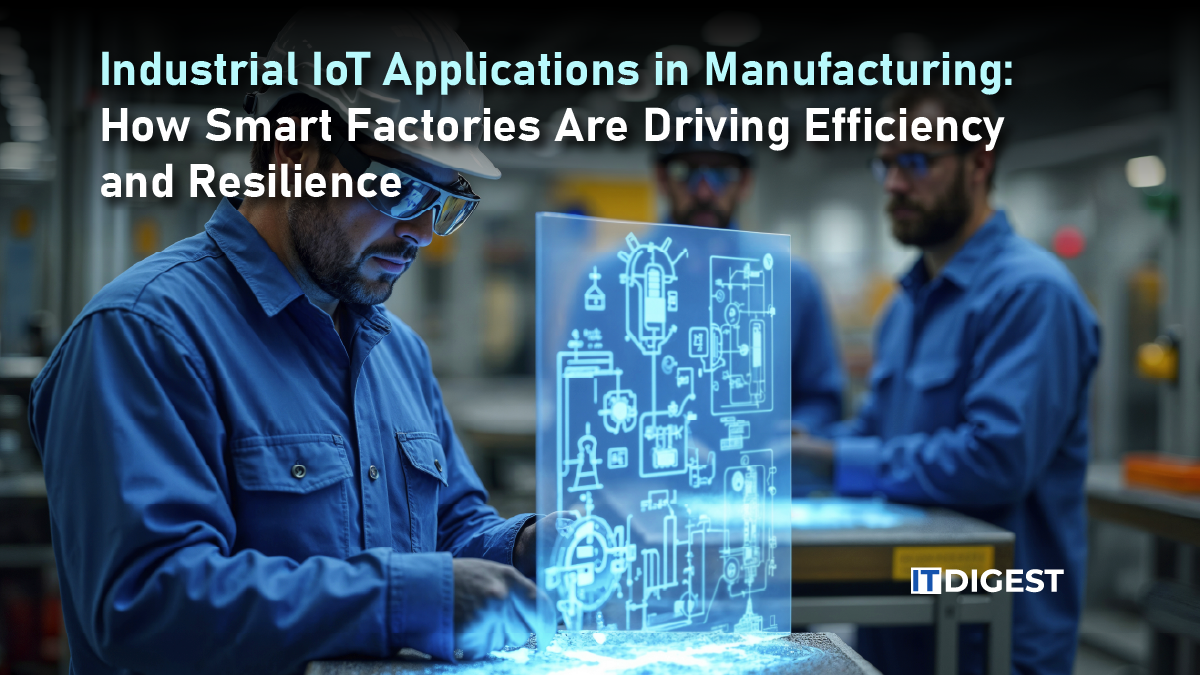
For years, manufacturing chased automation like it was the finish line. Faster lines. Fewer people. More output. It worked. Until it didn’t.
Supply chains broke. Energy prices jumped. Skilled labor became unreliable. Suddenly, a perfectly automated plant could still grind to a halt. That is when the conversation shifted. Quietly, but permanently.
Industrial IoT applications in manufacturing are not about speed anymore. They are about staying upright when the ground moves. Between 2024 and 2026, factories stopped assuming stability. They started planning for disruption. That meant data everywhere. Machines talking. Systems listening.
This is where just in time thinking gives way to just in case readiness. You do not wait for failure. You watch it forming. You act early.
IIoT is not emerging tech at this point. It is table stakes. 55% of industrial deployments already integrate IoT. 50% run on cloud. 44% use digital twins. That is not experimentation. That is normalization.
Smart factories today are built to absorb shocks. Efficiency is still part of the story. Resilience is the headline.
The three pillars of IIoT driven manufacturing
Strip away the hype and every IIoT setup that works is built on the same three ideas. Miss one and the system looks impressive until pressure hits.
Real time visibility
Most factories still operate in fragments. Machines know things. Operators know things. Leadership finds out later. IIoT collapses that gap. Sensor data flows from the shop floor into shared systems that everyone sees. Not reports. Live signals.
When performance drops or quality slips, the signal does not wait for a meeting. It shows up immediately. Decisions get faster because everyone is looking at the same reality.
Predictive intelligence
Old maintenance models were reactive. Something breaks. Someone fixes it. Or worse, maintenance is done on a schedule that ignores actual wear. IIoT changes that dynamic.
Machines report their own condition. Patterns form. Failures stop being surprises. Over time, systems do not just predict issues. They recommend actions. What to fix. When to fix it. What happens if you wait? That shift alone changes uptime math completely.
Automation and robotics that can adapt
Automation without data is rigid. It works until variability enters the picture. Connected automation is different. Systems adjust in real time. Product mix changes. Material quality fluctuates. Staffing levels shift. IIoT gives automation context. That is what makes it resilient.
This is not a fringe belief anymore. 92% of manufacturers say smart manufacturing will drive competitiveness over the next three years. That tells you leadership has moved on from debating if this matters.
Strategic applications turning data into operational wins
Industrial IoT applications in manufacturing only matter when they show up as real outcomes. Not dashboards. Not pilots. Outcomes.
Predictive maintenance built on digital twins
Digital twins change maintenance from guesswork to simulation. A twin mirrors the physical machine using live data. You test failure scenarios without touching the asset. You see stress patterns before damage shows up.
Maintenance becomes planned. Downtime becomes predictable. Spare parts stop piling up just in case.
Quality control that does not wait
Traditional quality checks happen too late. By the time defects are found, waste is already produced. IIoT pushes quality upstream.
Computer vision systems and inline sensors monitor production continuously. When defects emerge, adjustments happen immediately. Scrap drops. Consistency improves. Quality becomes something you control, not inspect.
Smart inventory and asset tracking
Factories lose money on things they already paid for. Tools go missing. Inventory accuracy drifts. Assets sit unused because nobody knows where they are.
Connected tracking fixes this without drama. You see what exists. Where it is. How often it moves. Planning becomes realistic instead of optimistic.
Energy management and sustainability
Energy is no longer a background cost. It is a board level concern. IIoT enables machine level monitoring of power and emissions. That detail matters.
You can shift loads. Flag inefficient equipment. Tie sustainability goals directly to operations instead of reports.
The payoff is not theoretical. Mature IIoT environments deliver around 18% median productivity improvement. Less mature ones sit closer to 9%. That gap exists because isolated use cases do not scale. Connected systems do.
Also Read: Cavli Strengthens LTE Cat 1bis IoT Module Portfolio with Flexible, Power-Efficient Multi-Form Factor Solutions
Operational resilience beyond efficiency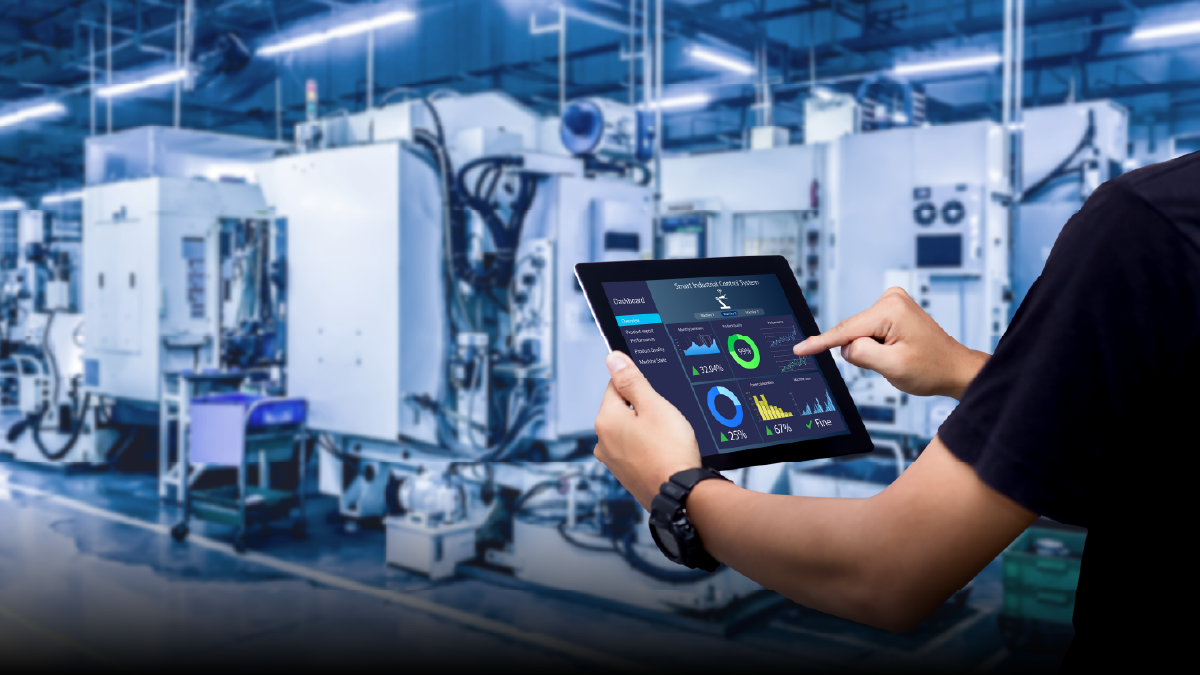
Efficiency helps when conditions are normal. Resilience is what matters when they are not.
IIoT supports resilience by reducing blind spots. When suppliers fail, connected factories adjust schedules faster. When labor is short, automation fills gaps. When demand swings, systems adapt without starting from scratch.
Remote monitoring plays a big role here. Experts no longer need to be on site to diagnose issues. Dark factories and low touch operations become realistic, not theoretical. Problems get handled before they cascade.
Modular IIoT architectures also allow faster pivots. New products. New volumes. New workflows. Software changes instead of infrastructure rebuilds.
The scale of this shift is massive. Industrial IoT is projected to unlock between 5.5 and 12.6 trillion dollars in economic value by 2030, with manufacturing as the biggest contributor. That number reflects resilience at a global level, not just plant level gains.
Implementation roadmap that does not fall apart
Most IIoT failures are not technical. They are architectural.
Edge versus cloud
Not all data belongs in the cloud. Control and safety need low latency. Analytics and learning benefit from scale. Good systems blend edge and cloud intentionally. Bad ones’ dump everything in one place and hope for the best.
Security from the start
IT and OT convergence expands risk. Every connected device is a potential entry point. Security has to be built into device onboarding, data access, and network design. Retrofitting security later is expensive and usually incomplete.
Making legacy machines useful
Most factories run equipment older than their IT stack. Replacing everything is not realistic. IIoT succeeds by wrapping legacy assets with sensors and gateways. Old machines start speaking modern data without being replaced.
The winners treat IIoT as a long term operating model. Not a tool rollout.
The future AI, 5G, and the connected worker
The next phase is already unfolding.
Generative AI adoption in industrial environments jumped by 2,400% in two years. That is not happening in isolation. It is riding on IIoT data. Operators ask questions in plain language. Systems answer with context. Troubleshooting speeds up.
Private 5G strengthens the backbone. High reliability. Low latency. Massive device connectivity. Mobility improves without sacrificing control.
Workers remain central. AR and wearables put instructions, warnings, and insights directly in context. Safety improves. Expertise scales. The factory gets smarter without removing people from the equation.
End Note
Smart factory ROI is not just higher output. It is fewer surprises. Faster recovery. Better decisions under pressure. Industrial IoT applications in manufacturing deliver value because they connect data, systems, and people around resilience.
FAQ’s
What is the difference between IoT and IIoT?
IoT focuses on consumer and general use. IIoT is built for industrial reliability, safety, and scale.
How does IIoT improve manufacturing safety?
Continuous monitoring catches unsafe conditions early. Wearables reduce exposure and improve response.
What is the first step in IIoT adoption?
Start with visibility. Connect critical assets. Build trust in the data. Scale from there.
