

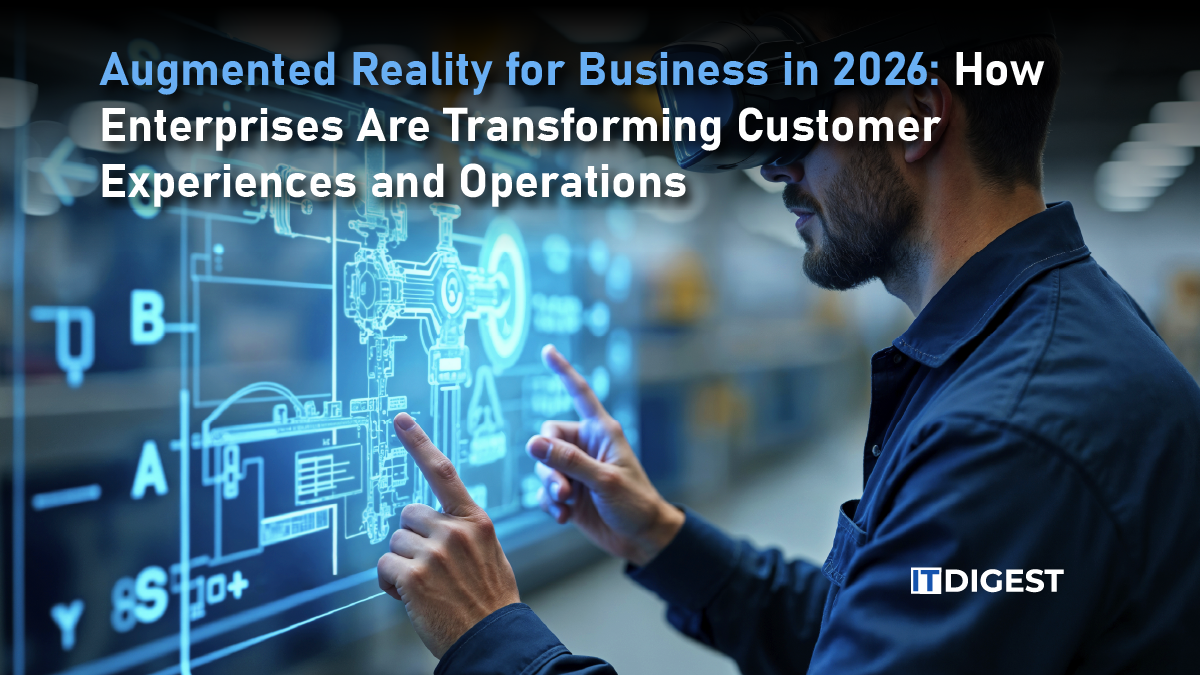
The shift is already underway. Not from desktop to mobile. That play is over. The real transition now is from mobile-first to presence-first.
Screens are starting to feel like a limitation. Because the interface is no longer confined to a device. It is moving into the physical world itself.
The augmented reality industry of 2026 exists between two major changes. The system creates live digital replicas of physical environments while transforming unchanging information into visual data that users can immediately interact with. The system now displays operational data through three-dimensional visualizations that show real-time information about products and operational areas.
According to Deloitte, spatial computing merges VR, AR, IoT, and AI analytics to bridge physical and digital worlds, and the focus is moving from experimentation to measurable impact.
That one shifts changes everything. AR is no longer a side project. It is moving into core business systems.
This article breaks down where augmented reality business is creating real value, where it is still misunderstood, and what it actually takes to make it work at scale.
Driving Customer Engagement Beyond the Virtual Try-On
 Most brands are still stuck in the first chapter of AR. They treat it like a campaign. A quick engagement spike. Something that looks impressive but fades fast.
That approach is already losing relevance.
Augmented reality business in customer experience is moving toward something more persistent. Less about one-time interactions and more about continuous guidance across the buying journey.
In physical retail, the next layer is not better displays. It is smarter environments. Imagine walking into a store and seeing contextual overlays that respond to your preferences in real time. Not recommendations buried inside an app, but suggestions placed directly in your field of view.
That is where personalization actually becomes useful.
Salesforce states that AI, machine learning, and augmented reality are shaping ecommerce by enabling personalized shopping experiences, virtual try-ons, and intelligent recommendations.
But the real story is not the technology. It is the shift in control. The interface is moving away from the phone. Devices like Apple Vision Pro and early-stage systems like Meta Orion signal what comes next. When that transition completes, brands no longer control the journey through apps or websites. They influence it through presence.
And that changes how engagement works.
The bigger opportunity, however, sits after the purchase. This is where most companies underinvest. AR-guided setups, interactive manuals, and real-time troubleshooting layers reduce friction once the product is in the customer’s hands. When products are easier to use, they get used more. And when usage increases, retention follows.
This is where augmented reality business stops being marketing and starts becoming a revenue engine.
Because engagement is no longer about attracting attention. It is about sustaining value.
Streamlining Operations Through the Industrial AR Revolution
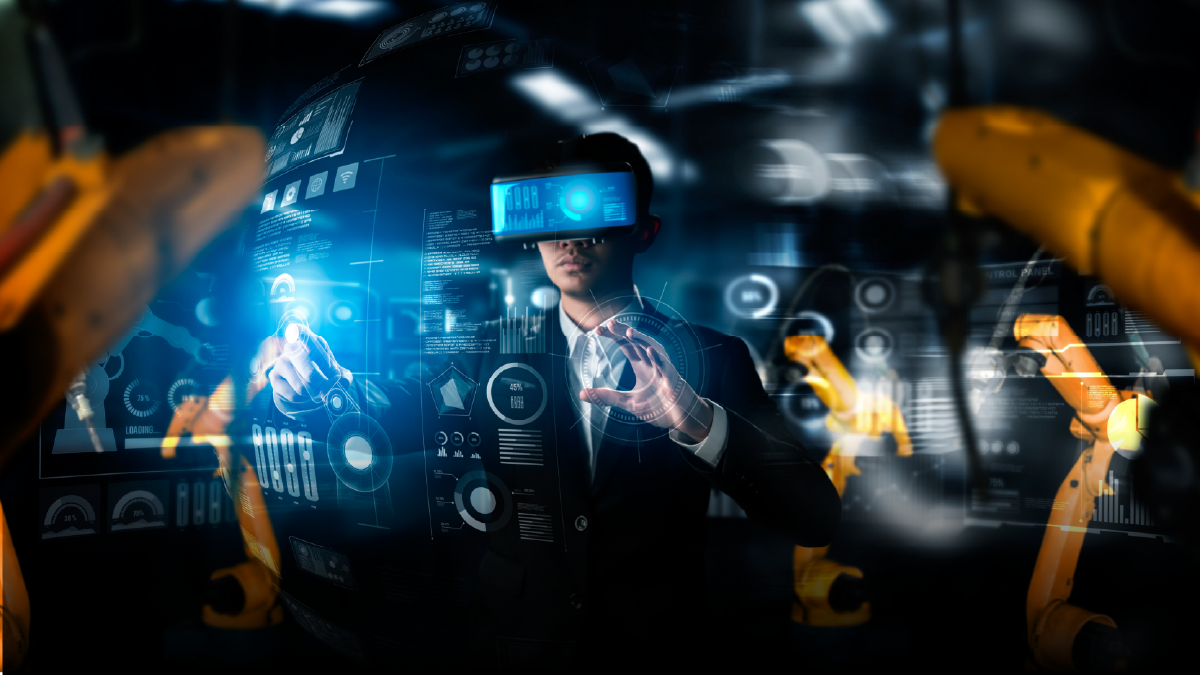 This is where the conversation shifts from interesting to essential.
Customer-facing AR gets visibility. Operational AR gets budgets. Because this is where the economics change.
Augmented reality business in operations is not about creating experiences. It is about removing inefficiencies that have been accepted for years.
Take remote assistance. Today, when a technician encounters a complex issue, escalation is the default path. Calls, documentation, sometimes even travel. Each step adds time and cost. Now replace that with a real-time visual layer where an expert can guide the technician through the problem. The outcome changes immediately. Issues are resolved faster. Travel reduces. Expertise scales without physical movement.
But this is only one layer.
Inside manufacturing environments, the impact is even more direct. Traditional quality control reacts after errors occur. AR changes that by guiding workers during the task itself. Visual overlays show exactly what needs to be done and highlight deviations instantly. This reduces defects before they happen.
And that directly affects margins.
However, the most critical advantage of augmented reality business is not speed or precision. It is knowledge retention.
Industries are facing a quiet but serious challenge. Skilled workers are retiring, and the next generation is not replacing them at the same rate. A large portion of operational knowledge is still undocumented. When experienced workers leave, that knowledge disappears.
AR changes this dynamic. It captures expertise and turns it into guided workflows that anyone can follow. New employees do not rely only on training manuals. They learn while working, with real-time visual assistance.
That is not training. That is scaling expertise.
IBM reports that companies using AR have seen average productivity improvements of 32 percent in training and operational workflows.
That number reflects more than efficiency. It reflects resilience. The less dependent you are on a shrinking talent pool, the more stable your operations become.
So the real question is not whether AR improves operations. It is whether operations can stay competitive without it.
Innovative Digital Experiences Shaping Marketing and Branding
Marketing is losing its old playbook.
Attention is fragmented. Users are overloaded. And traditional formats are hitting diminishing returns.
Augmented reality business does not just add another channel. It changes how brands exist in front of customers.
The shift starts with how businesses present themselves. Static content is losing its effectiveness, especially in complex B2B environments. Instead of explaining products through documents or slides, companies are starting to build interactive environments where clients can explore solutions in context. This makes understanding faster and decision-making easier.
At the same time, distribution is evolving. App fatigue is real. Most users do not want to download new apps just to engage with a brand. Web-based AR experiences remove that barrier. They allow instant access without installation, which changes how discovery happens.
This is where phygital branding comes in. The separation between physical and digital touchpoints is fading. Stores are becoming interactive spaces. Products are becoming dynamic interfaces. Campaigns are no longer static messages but ongoing experiences.
Augmented reality business enables this continuity. It allows brands to exist not just on screens but within environments.
And when that happens, engagement is no longer about capturing attention for a moment. It is about staying relevant in the space where decisions are made.
Also Read: Hybrid Cloud Solutions in 2026: How Enterprises Balance Flexibility, Security and Performance
Implementation Strategy for the 2026 Tech Stack
This is where most strategies fail.
Not because the idea is wrong, but because the execution is underestimated.
Augmented reality business is not just a front-end upgrade. It is a system-level transformation that depends heavily on infrastructure.
Start with hardware. Early AR ecosystems were fragmented and closed. That made scaling difficult and expensive. Now the shift is toward interoperability, where systems work across devices and platforms. Without this, enterprise adoption slows down.
Then comes content. Creating AR experiences manually does not scale. This is where AI plays a critical role. Generative systems can create and adapt content in real time based on user context and behavior. This turns AR from a static experience into a dynamic one.
But the most overlooked layer is performance.
Amazon Web Services states that real-time AR applications can require less than 20 milliseconds latency, around 10 Kbps uplink, and about 20 Mbps downlink to function effectively.
This is not a minor detail. It is the difference between a usable system and a broken one.
If latency is high, the experience lags. If bandwidth is insufficient, the system struggles. And when that happens, adoption drops.
The essential importance of edge computing and advanced connectivity solutions stems from their ability to handle processing tasks at locations that are closer to users which results in diminished waiting times and enhanced system dependability.
The surface appearance of AR as a design issue actually conceals its core nature which exists as an infrastructure challenge.
Ethics Privacy and the Spatial Divide
Every new interface creates new questions. AR brings a different level of complexity.
Because now, data is not limited to clicks and inputs. It includes environments, movements, and real-world interactions.
This raises immediate concerns around ownership and control. Who owns the data generated in an AR environment is still unclear? Companies that address this early will have an advantage in building trust.
However, there is another layer that often goes unnoticed. Platform dependency.
Microsoft announces that Dynamics 365 Guides and Remote Assist for HoloLens will enter discontinuation after December 31, 2026.
The situation presents a major danger to operations. A single platform dependence creates permanent security risks for organizations operating in dynamic technology environments. The rapid platform changes require organizations to implement immediate adaptations which result in financial expenses.
This is where strategy matters. Flexibility, interoperability, and data control become just as important as innovation.
Because in augmented reality business, trust is not only about privacy. It is also about stability.
Preparing for the Spatial Decade
Augmented reality business is no longer an experiment. It is becoming the interface layer for how work gets done.
The shift from screens to spaces is already in motion. And companies that adapt early will operate faster, engage better, and build stronger systems.
The question is simple.
Is your business ready for a world where the environment itself becomes the interface?
If not, 2026 is the time to fix that.
