

Paying for something takes seconds today. A few taps on a phone, a QR code scan, and the transaction is done. But behind that simple action, the financial industry is going through a major change. Banks are dealing with new competition, fintech companies are finding ways around old systems, and customers have little patience for slow payments.
The shift is already visible. In low- and middle-income economies, 42% of adults made an in-store or online digital merchant payment in 2024, compared with 35% in 2021. The next stage will depend on what businesses do with this growing adoption. Real-time payments, digital wallets, embedded finance and AI are changing how money moves. Each brings benefits, but each comes with problems that the industry still needs to solve.
Real-Time Payments and the Demand for Instant Liquidity
Having to wait for the money to come can be quite frustrating. In case of a business, it can also create many issues. The delay in payment from a customer can impact the supplier’s bill or payroll. Real-time payments seek to eliminate this waiting period by transferring money between accounts instantly.
Several countries have already built systems around this need. The US has FedNow, Europe has SEPA Instant Credit Transfer, and India has UPI. Each works within its own payment environment, but the broader idea is similar. People and businesses want access to their money without having to plan around banking hours.
Why do Real-Time Payments matter for B2B?
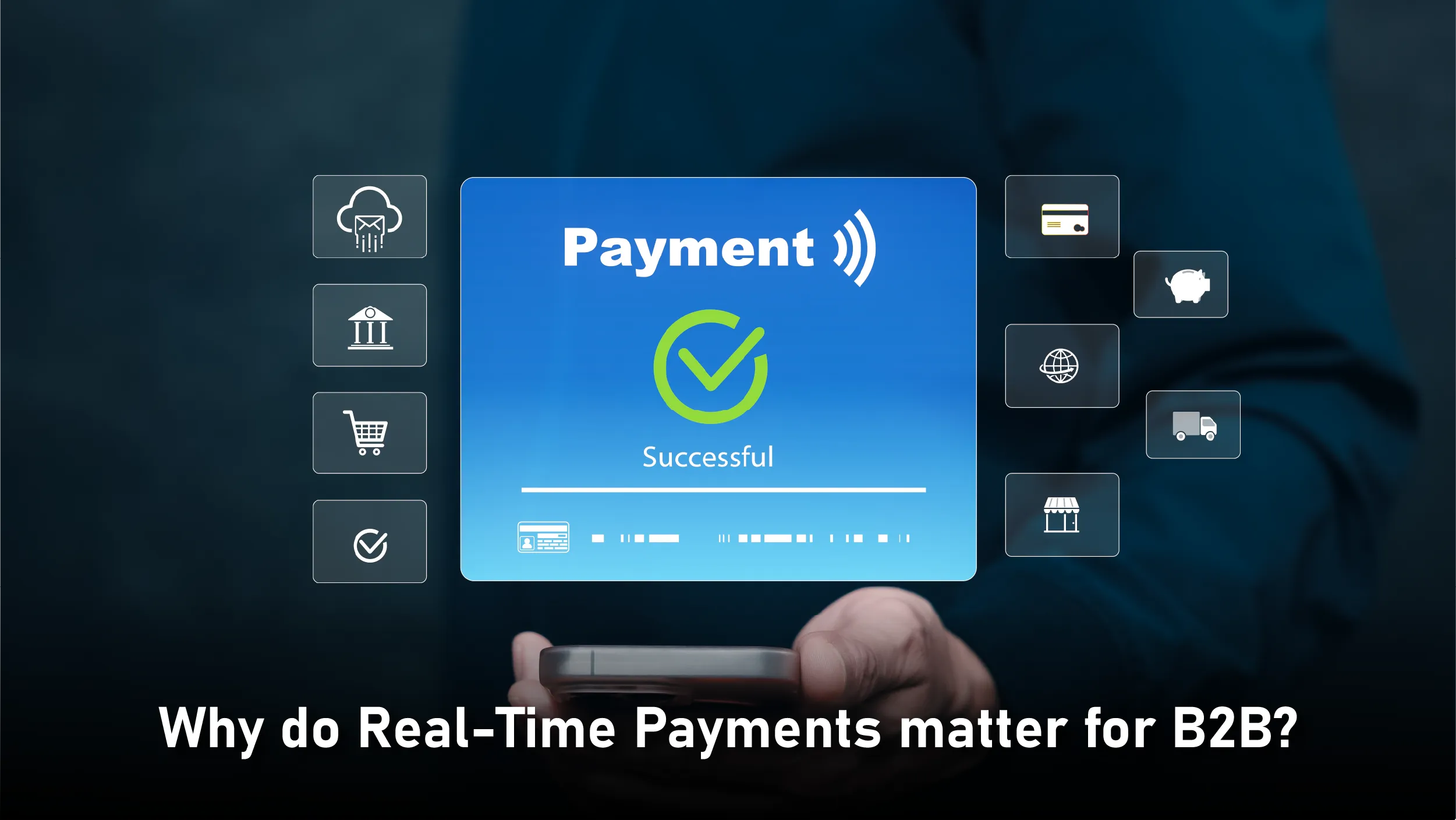 With respect to business, it can also help to simplify cash flow, a supplier doesn’t need to wait as long to get paid, and a business that receives customer payments can put it to use more quickly. And it may be simpler for finance teams to monitor cash going in and out.
That’s not to say speed will solve everything. Payment systems will still have to interface with accounting systems and other internal business finance tools. And international transactions will still be difficult. Currency conversions, compliance requirements, and intermediary banks will still be required even if the systems transferring money can do it in minutes.
The next step is to make these systems work better together. Otherwise, a payment can be instant in one market and frustratingly slow once it crosses a border.
Also Read: Robotic Process Automation (RPA) in Enterprise: How Businesses Automate Workflows and Scale Operations
Digital Wallets and the Rise of Super Apps
Using a card and typing in your information was once the norm. Now consumers want to skip those steps. Digital wallets – also called Apple Pay, Google Wallet, etc. – securely hold payment information and make it easier to check out, whether someone is making an online purchase or tapping their phone at the checkout line.
Visa documented how manual-entry guest checkout shrank from nearly half of the retailer’s ecommerce transactions in 2019 to 16% in 2025. The shift illustrates how much the payment journey has shifted to saved credentials and fewer clicks.
But it’s a different story across nations. In some markets, consumers’ digital payment routines were established on card payments. Others integrated QR codes and mobile payment apps long before anyone else. In China, WeChat revolutionized payments as part of social messaging, while Grab brought it into everyday services like transport and food delivery in Southeast Asia.
That creates a different kind of relationship with customers. A payment app has the potential to integrate itself into a user’s routine rather than appearing in their device only when they need to make a payment.
That’s not to say features will determine sales. Everyone wants to spend their money through the wallet if it works everywhere, at all devices, and people are happy sharing it. But if it’s a pain to use or few places accept it, convenience doesn’t matter.
Embedded Finance and Payments Inside Everyday Services
Think about booking a cab. You choose the ride, complete the trip and pay through the same application. There is no need to open a separate banking app or enter your card details again. This is a simple example of embedded payments.
Embedded finance is even more advanced. It involves integrating banking and finance capabilities into the core products of a non-financial organization, sometimes in traditional platforms like e-commerce websites or third-party applications. Think buy now, pay later at the checkout or payment and financing options for online traders.
APIs have this effect. They allow companies to integrate with financial providers and other third parties without having to develop those services in-house. This means less work for developers and more ownership for companies.
There is a valid business reason behind this. Every additional step a customer takes to check out adds one more chance for them to give up. A payment or financing method that is available just when the customer is ready to buy can remove a barrier to purchase.
The IMF’s Financial Access Survey reporting cited $350 billion in BNPL transaction value in 2024. It shows the scale of this payment category, though BNPL is only one part of embedded finance.
These services need to be used with care. There must be transparency about credit terms, customer information must be protected and payment disputes need to be effectively managed. Lumping finance in an app might add convenience but it doesn’t eliminate the risk.
Artificial Intelligence and the Problem of Payment Fraud
Moving money faster is useful. It also gives fraudsters less time to be stopped once a transaction has been authorized and sent. Some criminals steal account details. Others impersonate banks or merchants and convince people to approve payments themselves.
AI can help financial institutions spot suspicious behavior by looking at transaction patterns, devices and account activity. Instead of relying only on fixed rules, machine-learning systems can flag activity that looks unusual. Investigators can then focus on transactions that need a closer look.
Google reported that its AI-powered fraud-prevention chatbot helped increase scam detection rates by 21% in its Google Pay India update. This is a company-reported result, but it shows how AI is being used in practical payment security work.
Biometrics are also used in this process. Fingerprint and facial recognition can help to confirm one’s identity. However, this technology cannot prevent all kinds of frauds. In the case where an individual has been tricked into authorizing the transaction, the system will continue to regard the transaction as being valid.
This means that several aspects are required to ensure security. AI systems’ surveillance, identity verification, transaction limits, and customer warnings are needed in the process. It is essential for payment providers to secure the information that they use in the process.
Changing Expectations and Financial Inclusion
 Consumers have become accustomed to finding simple interactions online. They want to track them spend and view payments, and access helpful services without having to go through long and complex menus. The pressure is on for banks to provide the same digital ease of access.
According to research by MasterCard in 2026, the vast majority (60%) of the surveyed consumers thought that the features and benefits of the card were personalized to them. Payment providers can help them do this, personalization should work to the benefit of the customer, not encourage them to spend more.
For those without easy access to the formal banking system, digital payments can be part of the answer. All they need is a mobile and the right payment platform to make receiving and sending money, paying merchants and using the formal economy simpler. However, getting people a mobile phone does not make everything simple. Connectivity, financial literacy, ID requirements and fraud can still be barriers.
Regulation will also come into play when firms are navigating through these issues. Open banking enables organizations with the approved providers to have access to the transaction data on specific pre-defined rules. Data protection under GDPR in the EU and the proposed PSD3 arrangements to cover the payment services and safeguards of the consumers. Companies need to identify the rules that apply to each market and include trust to the user journey.
Conclusion
But what really matters are what happens to digital payments down the road. Can we have a faster way to send money that is less prone to being sent in the wrong direction? Faster transfers, effortless wallets and embedded financial services are all helpful, but nobody will use them if transactions are rejected or if they feel insecure.
You need to review your current payment technology. You may need stronger integrations or replacements of legacy systems. Complete rebuilds are unlikely to be an option. However, addressing weaknesses, building integrations for systems that need to work with each other, and strengthening your fraud controls can leave you well placed for the future. New payment technology will keep arriving. The real test is whether businesses can use it to solve problems customers actually face.
